


 5 Min Read


How to Manage a Remote Android Developer Across Time Zones Without Losing Your Mind
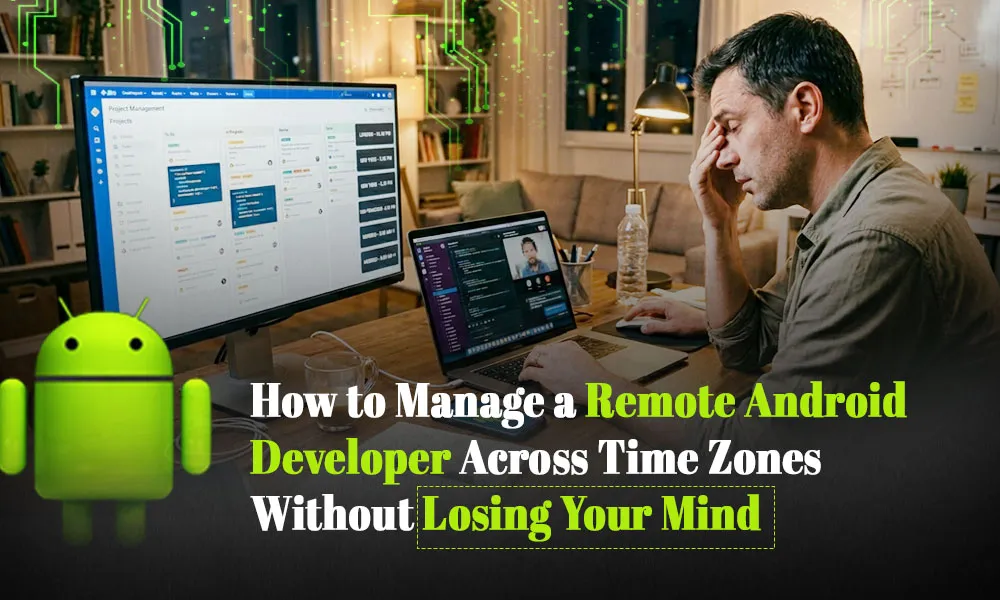
Managing a remote Android developer across time zones is a bit like running a relay race where everyone’s legs are fine, but the baton keeps getting lost in Slack.
The trick is simple, but not very easy: build a system that doesn’t care what time it is. Like we said, not easy at all.
Remote Resource does this for clients all the time: pulling Android application development out of the “late‑night chaos” zone and into something that looks suspiciously like a calm, predictable process. Even when your dev is 9½ hours ahead and has already had dinner before you’ve had coffee.
Step 1: Stop pretending everyone works the same hours
The fastest way to lose your mind is to act like your remote dev is “basically down the hall.”
They’re not. They’re on another planet where lunch is your midnight.
So first, accept the physics:
- You might get only 2–4 hours of overlap on some days….;-)
- Sometimes you’ll wake up to work already done.
- Sometimes they’ll wake up to messages you left half awake.
When you hire Android app developer talent from India or elsewhere, set this expectation in writing:
- Core overlap window (e.g., 2 hours that work for both).
- Response time norms (e.g., async answers within 12–24 hours).
- What is urgent vs what can wait for the next cycle?
Once everyone stops pretending it’s 9–5 for all, sanity starts.
Step 2: Design your work for async, not for panic
Most remote Android application development breaks because all decisions live in meetings.
Across time zones, that’s a crime.
You want:
- Well‑written tickets: clear requirements, acceptance criteria, screenshots, videos.
- One source of truth: JIRA, Linear, ClickUp, whatever…just pick and commit.
- Task‑level updates: dev comments on the task, not in random chat threads.
This way, when your developer logs in:
- They know exactly what to do.
- They don’t have to ask ten clarifying questions.
- They can ship even if you’re asleep.
Remote Resource calls this “bus‑proof tickets”: if you got hit by a bus, would the Android application development still move forward tomorrow?
Morbid, yes. Also useful.
Step 3: Use overlap hours like they’re gold (because they are)
You don’t need eight hours of overlap.
You need 60-120 minutes used properly.
In that window:
- Do stand‑up: what’s done, what’s next, what’s blocked.
- Make decisions that require back‑and‑forth.
- Review key UI changes or tricky architecture questions live.
What you don’t do in overlap time:
- Write specs from scratch.
- Debate vague priorities for an hour.
- Scroll through emails while your dev stares at your forehead on Zoom.
When you hire Android app developer teams via Remote Resource, we help lock this in: fixed weekly slots, clear agendas, and recordings for anyone who can’t attend.
Step 4: Over‑communicate status, under‑communicate noise
Visibility kills anxiety.
So you want:
- Daily or near‑daily short updates from your dev:
- “What I did today”
- “What I’ll do next”
- “What I’m stuck on”
- Weekly demo or screen share:
- Show the current Android build.
- Capture feedback on UX, flows, and performance.
What you don’t want:
- Constant “you there?” pings.
- Micro‑managing commit by commit.
- Confusing three channels with the same question.
Async check‑ins beat frantic DM storms every time.
Step 5: Make your Android project walk on its own legs
If the only person who understands the project is your developer, you’re in trouble.
Make the work self‑documenting:
- README that actually explains setup and structure.
- Architecture notes: modules, data flow, key decisions.
- ADRs (the acronym for architecture decision records) for big choices: why we picked this pattern, library, or API.
This makes it easier to:
- Add another Android application development resource later.
- Hand things off if your dev takes a break.
- Sleep at night knowing the app doesn’t live in one brain.
Remote Resource pushes for this from day one: we’re allergic to “mystery apps.”
Step 6: Treat your dev as a partner, not a vending machine

The fastest way to torpedo a remote relationship:
- Only talk in commands.
- Never explain the “why.”
- Ignore their suggestions.
Good Android developers are pattern‑spotters:
- “This flow will cause crashes on low‑end devices.”
- “This API call belongs in a repository, not in the Activity.”
- “We can reuse this component instead of building it three times.”
When you hire Android app developer talent through Remote Resource, we look for people who think, not just obey.
You give them:
- Context: user goals, business model, release plans.
- Autonomy within guardrails.
- Room to propose smarter solutions.
You get back: better app, fewer surprises.
Step 7: Time zones as a feature, not a bug
The fun twist: time zones can make you faster. Another reason to hire the right Android app developer; this will make more sense as you read on.
If you’re in the US or Europe and your Android developer is in India:
- You define work and decisions during your day.
- They build and test while you sleep.
- You wake up to progress, not stagnation.
Used right, that’s almost 16 hours of effective development time per calendar day.
It stops feeling like “distance” and starts feeling like a relay race where the baton actually lands in someone’s hand.
Remote Resource helps teams design for this: clear handoffs at end of day, proper issue tracking, and no “waiting 24 hours for a yes/no” decisions if it can be avoided.
A quick wrap-up before you go!
If your last attempt at managing a remote Android developer left you with sleepless nights, missed messages, and a half‑finished app, it’s probably not the concept that’s broken…it’s the system around it.
Remote Resource can help you hire Android app developer talent that’s already used to async work, time‑zone overlap, and disciplined Android application development, then wrap them in processes that keep everyone sane.
Tell us what you’re trying to build and where time zones are getting in the way.
We’ll bring the Android developer (and the rhythm) that makes “remote” feel less like chaos and more like a superpower.

Frequently Asked Questions
-
Collaborating across time zones with a remote Android developer is all about structure, not heroics. Use one shared project tool, write bus‑proof tickets, and agree on a 2–3 hour overlap window for live calls. The rest of the time, rely on async updates, screen‑recorded demos, and clear deadlines. When you hire Android app developer teams through Remote Resource, we help you formalize this rhythm so you don’t live inside “you there?” messages.
-
If you’re managing Android application development remotely, treat your calendar like a defensive shield. Block focus time, cluster meetings into specific hours, and never schedule calls in the middle of your developer’s prime coding window if you can avoid it. Use async tools for status updates and reserve live time for decisions. The more predictable your rhythm, the easier it is for a remote Android developer to plan deep work instead of context‑switching all day.
-
Legality depends on tax, employment, and visa rules of both countries involved...which is exactly why you don’t wing it. Never ever. Many firms hire Android app developer talent abroad using contractor agreements or via compliant partners who handle local regulations. You need to consider permanent establishment risk, payroll, and data protection. Remote Resource works within proper legal frameworks so your Android application development doesn’t accidentally turn into a cross‑border compliance horror story.