


 7 Min Read


15 Must-Have Skills Every Magento Developer Should Have in 2026
If you are running on Magento (now Adobe Commerce), you are driving a Ferrari. It is powerful. It can handle massive catalogs and complex pricing rules that other platforms struggle with. But a Ferrari is useless if your mechanic only knows how to fix bicycles. This is why finding the right Magento developers is the single most important decision you will make this year.
Most businesses fail with this platform not because the software is bad, but because their hiring process is broken.
They hire generic web designers, call them experts, and expect them to understand enterprise-level architecture. Then, when the site crashes on Black Friday, they blame the technology. They should be blaming their lack of standards.
If you want to survive and scale your revenue this year, you need a roadmap. You need to know exactly what separates the amateurs from the pros.
This is not a list of optional upgrades. This is the baseline. If your current team lacks these skills, you are losing money due to slow load times, broken checkouts, and security blind spots.
Let’s break down the 15 non-negotiable skills your magento developers must have so you can stop guessing and start building a profitable machine.
The Core Engineering Foundation
You cannot build a skyscraper on a swamp. These first skills are the absolute bedrock of backend development. If your team fails here, the whole site fails.
-
Advanced PHP Expertise
Magento is not a drag-and-drop website builder. It is a complex, heavy machine built primarily on PHP.
- Your developer cannot just know “basic” PHP.
- They must understand PHP 8.x inside and out.
They need to know how to write clean, object-oriented code that does not bog down the server. If they write sloppy PHP, your store will crawl.
-
Deep MySQL Database Knowledge
E-commerce is just moving data around. Products, prices, customer details, and order histories all live in the database.
- Magento uses a complex database structure called EAV (Entity-Attribute-Value).
- A bad developer will write a database query that takes five seconds to load.
A great developer knows how to optimize MySQL so that even a catalog of 100,000 products loads instantly.
-
Zend Framework / Laminas Understanding
Magento’s backend relies heavily on components from the Zend Framework (now transitioned to Laminas).
- A developer needs to know how this underlying framework operates.
If they don’t, they will try to force Magento to perform tasks it wasn’t designed to handle. This leads to broken modules and nightmare upgrades later on.
The Modern Frontend & Headless Shift
The way your store looks and feels to the customer is changing rapidly. The days of clunky desktop sites are over.
-
PWA Studio Mastery
Progressive Web Apps (PWAs) are the standard in 2026.
A PWA makes your website look and behave like a native mobile app without requiring customers to download anything from the App Store.
Your developer needs to know how to use Magento’s PWA Studio to build lightning-fast mobile experiences. Mobile traffic is everything. If your mobile site is slow, you are dead.
-
GraphQLFluency
When you go headless, the frontend (what the customer sees) and the backend (where the data lives) are separated.
- GraphQL is the language they use to talk to each other.
It allows the frontend to ask for the exact data it needs, nothing more. This speeds up the site dramatically.
- If your developer only knows old REST APIs, they are living in the past.
-
HTML5, CSS3, and Modern JavaScript
Even with all the complex backend logic, the frontend still relies on standard web technologies.
- They need to write clean HTML and CSS.
They need to understand modern JavaScript frameworks (like React or Vue.js), especially if they are building custom headless frontends.
- Bad CSS means a messy site on mobile devices. You cannot afford that.
Performance and Cloud Architecture
Modern customers have zero patience. If your site takes more than three seconds to load, they will leave and buy from your competitor. It is that simple.
-
Varnish & Redis Caching
Magento is heavy. If the server must rebuild the page from scratch every time a customer clicks a link, your site will crash under heavy traffic.
- Varnish caches the full page and serves it to the customer instantly.
- Redis caches the backend database queries.
A developer must know how to configure both of these perfectly. If the cache is wrong, customers might see other people’s shopping carts.
-
Elasticsearch / OpenSearch Integration
The default Magento search is terrible.
Customers expect Google-level search on your website. If a word is misspelled, the search should still find the product.
Your developer must be an expert at configuring OpenSearch (or Elasticsearch). This directly impacts your conversion rate. If they can’t find it, they can’t buy it.
-
Adobe Commerce Cloud Management
Many enterprise stores are moving to Adobe Commerce Cloud.
This is not a standard web host. It is a highly specialized, containerized environment.
Your developer needs to know how to deploy code here without breaking the live environment. They need to understand Adobe’s specific cloud architecture.
Workflow, Security, and Quality Control

A developer who writes good code but has a messy workflow is still a massive liability to your business.
-
Git Version Control
Never let anyone edit code directly on your live website. Ever.
Your developer must use Git.
Git tracks every single change made to the code. If a new feature breaks the checkout, Git allows them to roll back to the previous version in seconds.
-
CI/CD Pipeline Implementation
Continuous Integration and Continuous Deployment (CI/CD) is how modern software is built.
This means that when a developer completes a new feature, automated scripts test it and deploy it to the server.
It eliminates human error. It ensures that deploying an update on a Friday afternoon doesn’t destroy your weekend.
-
Iron-Clad Security Practices
E-commerce stores are massive targets for hackers. You hold credit card data and customer identities.
Your developer must know how to patch Magento security vulnerabilities the day they are released.
They must understand how to prevent SQL injections and cross-site scripting attacks.
One security breach can bankrupt your company and ruin your reputation forever.
-
Automated Testing (PHPUnit)
“I clicked around, and it looks fine” is not a testing strategy.
A professional Magento developer writes code that tests their code.
They use tools such as PHPUnit to automatically verify that the new checkout button does not inadvertently break the shipping calculator.
-
Advanced Debugging & Troubleshooting
Things will break. It is the nature of software.
The difference between an amateur and a pro is how fast they find the problem.
An expert developer can read system logs, trace database queries, and isolate the exact line of code causing the issue. They don’t guess; they investigate.
-
E-commerce Business Acumen
This is the rarest skill on the list.
You do not want a code monkey. You want a strategic partner.
A great developer understands that the goal is not to write code; the goal is to sell products.
They should push back if you request a feature that would degrade the user experience. They should understand concepts like conversion rate optimization (CRO) and average order value (AOV).
Why You Are Struggling
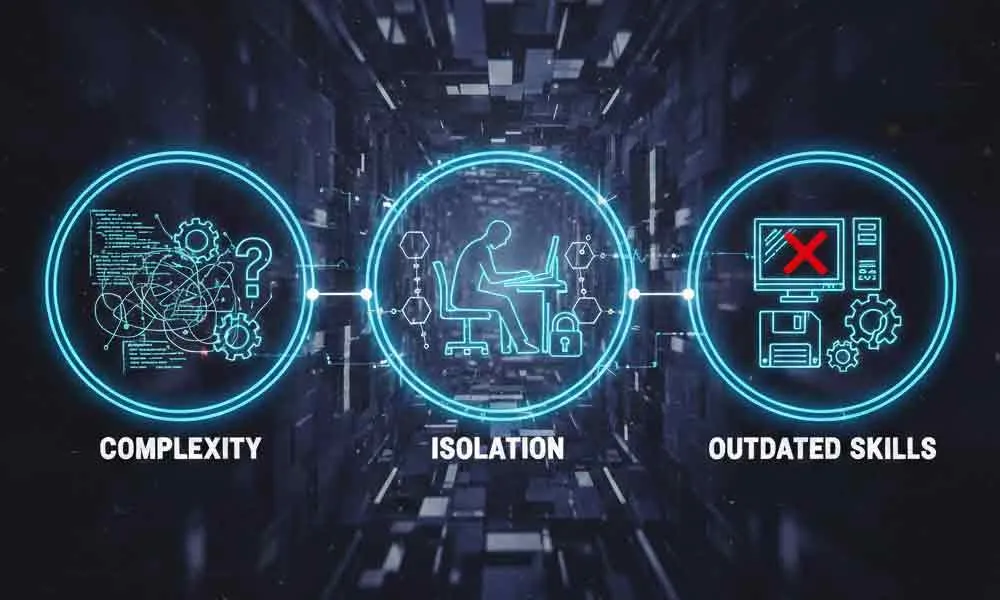
You now know the baseline skills. But here is the harsh reality of the market right now.
Some business owners hire a low-cost freelancer who disappears when the site goes down.
Or they hire a local “marketing agency” that talks a big game, quietly outsources the work, and marks up the price by 300%.
Both of these options lead to frustration, broken websites, and lost revenue. You need elite skills, but you need them at a price that makes financial sense. You need a dedicated remote resource.
The Remote Resource Advantage
When you tap into a global remote resource, you completely change the math of your business.
The smartest brands realized years ago that code is universal. A brilliant engineer in India or Latin America uses the same software, writes the same PHP, and uses the same Git repositories as an engineer in Silicon Valley.
By utilizing a premium remote resource, you bypass the local talent shortage. You bypass the inflated salaries. You stop paying for geography and start paying for actual talent.
This is exactly why our company, Remote Resource, exists.
We know that e-commerce brands need world-class engineering talent, but they cannot afford to burn through cash. We act as your talent bridge.
We find the top 10% of global Magento developers.
We vet them rigorously against the exact 15 skills listed above.
You don’t get a flaky freelancer. You get a dedicated, full-time remote resource who works exclusively for your brand.
They integrate into your team. They attend your daily meetings.
We handle payroll, HR compliance, and security infrastructure. You get the architectural brain of a senior enterprise engineer for a fraction of the cost of a local hire. Building a team through Remote Resource is the ultimate cheat code for scaling your store in 2026.

Frequently Asked Questions
-
To succeed today, magento developers need a mix of deep backend knowledge (PHP 8.x, MySQL, Laminas) and modern frontend capabilities (PWA Studio, GraphQL). Beyond just writing code, they must be experts in performance optimization (using Varnish and Redis), cloud infrastructure, and strict version control like Git. They also need a strong understanding of e-commerce business logic to ensure their code actually drives sales and conversions.
-
The platform is primarily written in PHP. It is a complex, object-oriented PHP application that relies heavily on a MySQL database to store all of its information. While the backend is entirely PHP-driven, your remote resource developers also need to be fluent in HTML, CSS, and modern JavaScript to build the frontend user interfaces, especially as the platform continues to shift toward headless architecture.
-
The future scope is highly lucrative but demanding. As Adobe Commerce cements its place as the top platform for serious B2B and B2C brands, the demand for elite magento developers is skyrocketing. The developers who will win the next decade are those moving away from legacy monolithic builds and mastering "Headless" commerce, complex API integrations, and Progressive Web Apps (PWAs).