


 6 Min Read

The Rise of Remote Development Teams, And Why Growing Businesses Secretly Needed Them All Along
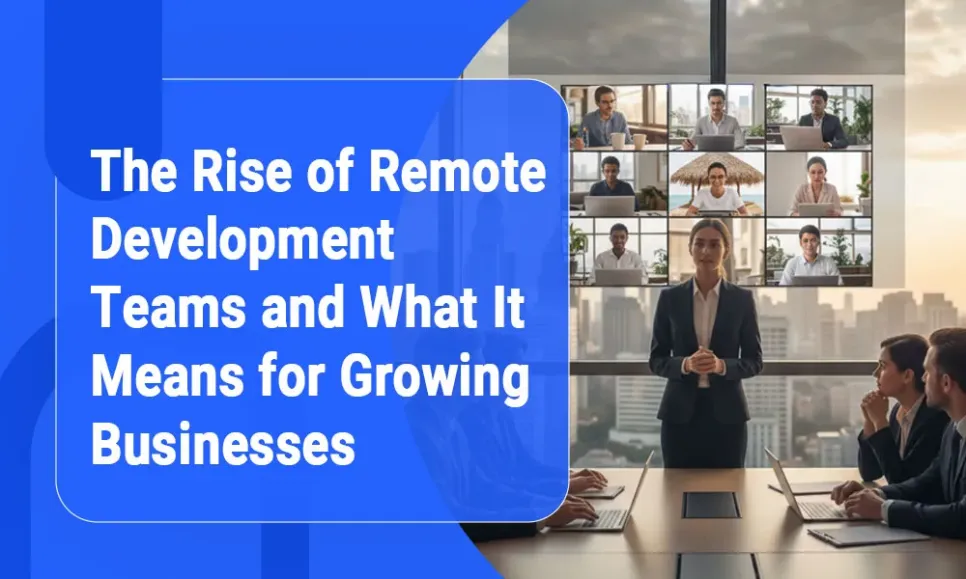
Once upon a not‑so‑distant time, “the tech team” lived in one sad fluorescent room, near the server closet and the broken coffee machine. If you wanted to ship a feature, you walked over, cleared your throat, and hoped the one backend person wasn’t on “urgent production issue” number 47.
Then the world broke in a few interesting ways. Offices emptied. Zoom multiplied. Slack became a place where people lived, not just worked.
And suddenly, something funny happened: companies discovered they could actually build better, faster, cheaper by going remote on purpose instead of by accident.
That’s where remote development teams came from: not as a trend, but as a correction. A fix to “we can’t find talent,” “we can’t afford talent,” and “our release cycle moves like wet cement.”
Remote Resource sits right in the middle of this shift, watching founders and managers quietly figure out that if you can hire web developer talent from anywhere, you probably should. Especially if “anywhere” includes hire remote developers India and other places that don’t charge San Francisco rent for every line of code.
Why Remote Teams Became the Default, Not the Backup
-
Local hiring got ridiculous.
A senior developer in New York or London wants a salary that makes your CFO do deep breathing exercises. Meanwhile, equally skilled engineers in India, Eastern Europe, and Latin America are writing production code at a fraction of the cost.
-
The work stopped caring where people sat.
Git, cloud, CI/CD, Slack, Jira…none of them require you to share an air conditioning duct. Code pushes look the same whether they came from Bangalore, Berlin, or a kitchen table in Boise.
-
Startups realized time zones can be a feature.
One team stops at 6 pm. Another wakes up and keeps going. “Follow‑the‑sun” development means bugs die while you sleep,p and releases don’t wait for Monday.
-
Talent decided they like control.
Developers found out they could do focused work without commutes, open‑office noise, or soul‑draining “alignment meetings.” So the best ones started gravitating to companies that were happy to let them stay put.
Remote Resource saw the pattern: companies that treat remote as Plan A outperform the ones still trying to lure everyone back into a building.
What This Means for Growing Businesses (Translation: You Have Options Now)
-
You’re no longer stuck with whoever lives within 20km!
Need a React dev with fintech experience? A backend engineer who hates latency more than anything? You don’t have to pray that they live in your city. You can hire web developer talent in other countries who’ve already shipped exactly what you’re trying to build.
-
You can scale up (and down) without drama.
Launch sprint coming? Add three remote devs for 6 months. Quiet period? Ramp down without layoffs, theatrics, or empty desks haunting your office.
-
Your overhead stops eating your runway.
Office rent, commuting subsidies, chairs, snacks – those costs vanish or shrink. That money can go into product, marketing, or literally just not dying as a business.
-
You get diversity of experience built in.
When you hire remote developers from India, Eastern Europe, and Latin America, you accidentally pick up perspectives from different markets, industries, and user habits. This shows up in your UX, edge‑case handling, and feature ideas.
In short, remote teams turn location from a constraint into a strategy.
But Doesn’t That Break Everything? (Spoiler: Only If You Do It Badly)
Remote development sounds magical until you run it like a local team with worse Wi‑Fi.
The horror/scary movie version:
- No documentation
- Meetings at 3 am for somebody
- Vague requirements
- Zero onboarding
- “Let’s just wing it”
The healthy version – the kind Remote Resource helps set up – looks more like this:
- Clear responsibilities, written down.
Everyone knows who owns what. Frontend, backend, infra, QA…no mystery. Tickets are specific. Specs exist. People don’t guess for a living.
- Async by default, calls by exception.
Decisions documented. Loom videos, design briefs, and task descriptions that don’t require five follow‑up chats.
- Tooling that doesn’t suck.
Git repos organized. CI pipelines green. Access to staging and logs. “Works on my machine” becomes “works in the pipeline or it doesn’t ship.”
- Real onboarding for remote devs.
Not just “Here’s the repo, good luck.” Instead: architecture overview, coding standards, business context, and the why behind features.
Remote doesn’t break things. Shoddy management does. Remote just removes the illusion that winging it was ever working.
Why India Keeps Showing Up in This Conversation
You could hire remote developers from India or from half the planet, but India keeps coming up for a few quiet reasons:
- Massive talent pool.
Tens of thousands of engineers with real production experience, not just bootcamp projects.
- English fluency and time‑zone overlap.
Enough overlap with US/UK to do live standups and async in between.
- Cost effectiveness without talent compromise.
Not “cheap labor,” but “fair local compensation that converts into sustainable pricing for you.”
Remote Resource leans into this: match Western product teams with Indian engineering talent that thinks like owners, not gig workers. You get senior brains at mid‑level prices.
How Remote Teams Change the Way You Build Products

-
Prototypes in weeks, not quarters
Need to test a new SaaS module? Spin up a squad: 1 backend, 1 frontend, 1 QA – all remote. Two sprints later, you’re showing something real to customers.
-
Continuous delivery stops being a buzzword
While your local team sleeps, your remote devs merge, test, and deploy bug fixes or small improvements. Release cadence increases without burning anyone out.
-
You can specialize without over‑hiring
Need a dev who eats accessibility issues for breakfast? Or someone who only thinks about database performance? You don’t have to hire them full‑time forever. You can bring them in via remote engagement and keep them around as needed.
-
You detach headcount from city economics
Your ability to build no longer depends on lease prices and local salary expectations. It depends on how well you can integrate distributed humans into a coherent team.
This is the part that scares old‑school managers and quietly delights everyone else.
Where Remote Resource Fits In (And Why It’s Easier Than DIY)
You can try to do this alone:
- Post 100 jobs.
- Talk to 400 candidates.
- Realize 370 of them copied-pasted answers.
- Spend 6 months filling 2 roles.
- Pray they don’t leave in 8 months.
Or you can cheat a little…;-)
Remote Resource does the boring part:
- Sourcing devs who’ve actually shipped things, not just updated portfolios.
- Vetting for skills (code tests, architecture interviews, communication).
- Matching by time zone, tech stack, and temperament.
- Handling contracts, compliance, and the human mess around starts/stops.
You still choose who joins your team. You still run your product. You just don’t waste half a year playing recruiter when you could be building stuff.
What This All Means for Your Growing Business
In a sentence: the excuses are gone.
- “We can’t find good devs here.”
Then stop limiting “here” to one city.
- “We can’t afford a full team.”
Then assemble one remotely, on terms that match your stage.
- “We’re worried about quality.”
Then partner with people whose entire job is filtering for quality before you ever hop on a call.
The rise of remote development teams isn’t about being trendy. It’s about accepting the obvious: great products don’t care where they were coded. They care about how fast you learn, ship, and improve.
Remote Resource exists for the founders and managers who’ve quietly realized this and are done pretending geography is a hiring strategy. If you’re at that point…tired of “local only” bottlenecks and ready to hire web developer talent from wherever the good ones live, then remote isn’t a risk anymore.
It’s just how serious teams build things now.
