


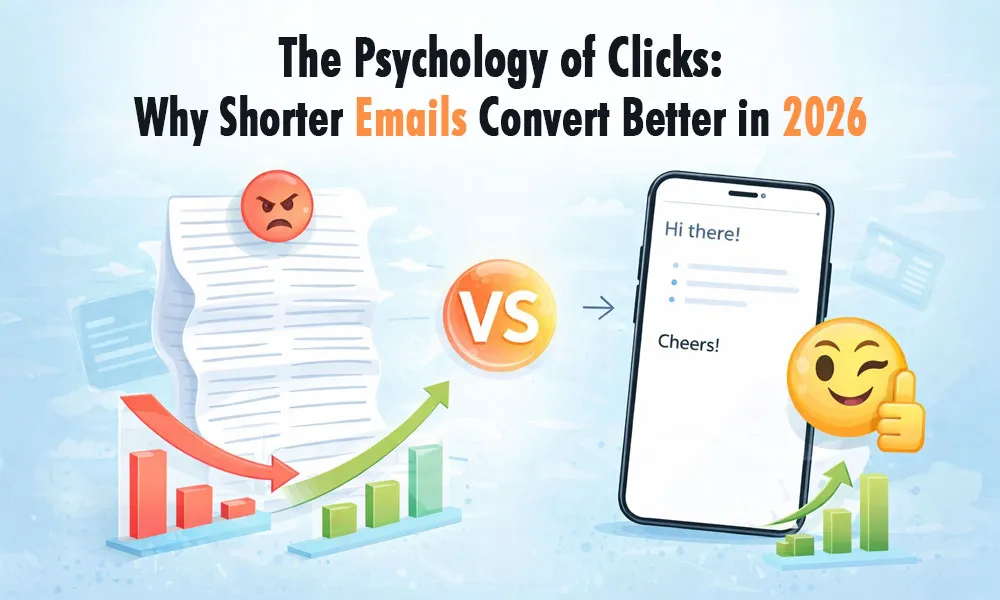
In 2026, your email inbox isn’t a mailbox. It’s a battlefield. We could have named this blog “How to Make Busy People Care Enough to Click Before They Swipe Away” and it would look and sound the same too!
Every notification pings like a tiny alarm clock. You swipe through 200 messages in the time it takes to brew coffee. Attention isn’t scarce anymore…it’s extinct.
That’s why email marketing feels like shouting into a hurricane. Except for the people who figured something out: shorter emails don’t just get opened. They get clicked. They get converted. They make money.
Remote Resource watches this play out for clients who think “content is king” and then wonder why their 3,000‑word masterpiece generates 47 opens and 2 clicks. The secret? Psychology. Humans don’t read emails. They scan for a reason to care.
Here’s why shorter wins, and how to make it work for your email marketing services.
The Brain Doesn’t Want Your Novel
Your subscriber’s brain isn’t a filing cabinet. It’s a bouncer at a club. It asks one question: “Do you belong here?” Shorter emails sneak past faster.
The problems:
- Decision fatigue is real.
People see hundreds of marketing messages a day. By the time they hit yours, their “maybe later” muscle is exhausted. This is where an experienced digital marketing agency comes in.
- Mobile is most of your opens.
Thumbs scroll. Eyes skim. You get about three seconds to earn a click.
- Inbox algorithms punish the slow.
Long emails with low engagement train Gmail and friends to bury you in Promotions or worse.
Short emails respect that reality. They say, “I get it. Here’s why this (whatever you are selling) matters. Click if you agree.”
The 3‑Second Conversion Window
Picture your reader: coffee in one hand, phone in the other, half reading a text from their spouse.
Your job: make them click before the text wins.
The pieces:
- Subject line: short and sharp.
Seven words or fewer. One clear idea. No fluff.
- Preheader: one line that finishes the thought.
It should answer, “Okay, but why should I care?”
- Body: 3-5 lines.
Problem, hint at solution, one call‑to‑action. That’s it.
When email marketing is done this way, the whole message can be read in under ten seconds and acted on in two.
Why Short Emails Outperform Long Ones
Long emails used to work. Back when people read newsletters like magazines.
Now?
- Short emails have higher click‑through rates. CTR, in jargon-sphere.
- Single‑focus emails convert better than “here’s everything we did this month.”
- Every extra scroll loses a chunk of readers.
Why it works:
- Less cognitive load.
One idea is easier to process than five.
- Clear intent.
The reader knows exactly what the email wants them to do.
- Better alignment with mobile behavior.
One screen, one story, one button.
Remote Resource sees this every time we shorten an over‑written campaign: clicks go up, complaints go down, unsubscribes stay flat or improve.
The Psychology Behind It
Short emails work because they lean into how the brain cheats.
- We remember beginnings and endings.
Short messages are almost all beginning and ending, which helps them stick.
- We hate unfinished tasks.
A simple “click here to fix this” creates a tiny itch. Clicking scratches it.
- We avoid hard choices.
One big button beats five little links fighting for attention.
- We like feeling smart.
When we “get it” quickly, we’re more likely to reward the sender with a click.
Good email marketing services don’t try to fight this. They weaponize it.
Subject Lines: The First Gatekeeper
Your subject line is a tiny billboard on a very crowded highway. Trust us on this, we’ve been a reputable digital marketing agency for many years now.
What tends to work:
- Numbers: “Save 40% today”
- Urgency: “Ends in 24 hours”
- Curiosity: “Most people get this wrong”
- Personal: “A quick idea for you, Sarah”
- Benefit: “Cut your shipping costs this month”
What tends to fail:
- Vague: “Newsletter #14”
- Desperate: “PLEASE READ THIS!!!”
- Overlong: anything that gets cut off on mobile
- Dishonest clickbait: gets opened once, ignored forever
Short, honest, benefit‑driven subjects give your email marketing a fighting chance.
The Body: One Problem, One Promise, One Path
If the subject line gets you in the door, the body has one job: keep you from turning around.
Keep it simple:
- Name the problem they already feel.
- Make the pain a tiny bit sharper so they nod.
- Offer one clear path out of it.
The mistake most teams make is trying to cram an entire sales page into the email. In 2026, you don’t have that luxury. The email should feel like a doorway, not a museum tour.
Short copy respects the reader’s time and intelligence. It whispers, “You’re busy; here’s the good part.”
Buttons: Make Clicking the Easiest Possible Choice!
The button is where the psychology becomes physical.
To stack the odds:
- Use one primary button, not three equals.
- Make the text sound like the reader talking to themselves (“Get my demo,” “Fix my billing”).
- Place it where it’s impossible to miss on mobile.
Every extra decision – extra links, extra offers, extra “by the way” – picks off a few more would‑be clickers. Good email marketing trims ruthlessly until the path is obvious.
Mobile: The Big, Annoying Reality
Most of your audience is opening on a phone.
That means:
- Single‑column layouts are mandatory.
- Tiny fonts and dense blocks are suicide.
- Anything that requires pinching or sideways scrolling is gone in a second.
Shorter emails naturally behave better on mobile. There’s simply less to break and less to squint at. The reader’s thumb barely moves before they reach the decision point.
Algorithms and Privacy: Why Clicks Matter More Than Ever
Inbox providers are smarter now.
- Low‑engagement senders slowly get vanished.
- Opens are less reliable thanks to privacy updates.
- What still matters? Clicks. Replies. Actual interaction.
Short, focused emails tend to get more of those. They disrespect the old “vanity metric” obsession and chase what actually moves the needle: actions.
That’s where modern email marketing services live now: optimizing for behavior, not for open‑rate bragging rights.
Testing: The Only Real & Honest Way to Know
All of this is theory until you test it on your own audience.
Short emails make testing easier:
- It’s simpler to swap one subject, one line, one button.
- It’s faster to produce variations.
- It’s clearer which change caused the lift.
Teams that test regularly learn that their instincts are often wrong. The “clever” line underperforms the simple one. The shorter version with plainer language wins.
Remote Resource is almost boring about this: test small, roll out winners, repeat. Over time, short, sharp, human emails start to feel less like a gamble and more like a machine.
The Real Reason Shorter Emails Win
Here’s the thing nobody likes to admit: shorter emails force you to be clear.
You can’t hide behind paragraphs. You can’t bury weak offers in pretty design. You have to know:
- Who is this for?
- What do they want?
- What am I offering?
- Why should they care right now?
When you answer those honestly, the email almost writes itself. And it’s always shorter than you think.
Email Marketing Trends in 2026 and Beyond
Email marketing isn’t dying. It’s just getting weirder, sharper, and more ruthless about earning attention. Here’s what’s coming:
1. AI‑Generated, Human‑Approved Copy
- Tools now write decent first drafts.
- Humans rewrite for voice and punch.
- Expect 80% faster campaign production, 30% better results.
- Short emails + AI = campaigns in hours, not weeks.
2. Privacy‑Proof Attribution
- Apple Mail blocks open tracking.
- Click‑to‑revenue becomes the only real metric.
- Revenue per send > open rate > vanity stats.
- Smart teams obsess over post‑click conversion paths.
3. Interactive AMP Emails
- Buttons inside emails (no website needed).
- Calendly booking, product carousels, survey polls.
- Conversion rates jump 20‑50% on interactive flows.
- Gmail/Outlook slowly rolling out; early adopters win.
4. Zero‑Party Data Takes Over
- “Tell us your budget” → personalized pricing emails.
- “Which pain point hurts most?” → segmented nurture sequences.
- First‑party data > third‑party cookies > spray and pray.
- Email becomes your consent engine.
5. Voice‑First Subject Lines
- Siri/Alexa read subjects aloud.
- “Your $97 credit expires Friday” sounds urgent.
- “Newsletter #47” sounds like spam.
- Voice optimization becomes a new A/B test layer.
6. RSS‑Style Daily Digests
- Gmail’s bundling gets smarter.
- “Daily from [Your Brand]” beats “solo emails.”
- One daily hit > 3 scattered attempts.
- Subscribers control cadence, not you.
7. Shoppable Email (Commerce 2.0)
- Apple Wallet passes, PayPal buttons, Shopify Buy direct.
- Checkout inside inbox, no app switch.
- Impulse buys spike 40%+ on frictionless flows.
- Brands owning the full purchase path win.
The trend? Email marketing becomes transactional, conversational, and surgically precise. Short formats + interactivity + zero‑party data = the 2026 gold standard. Remote Resource stays ahead of this curve, testing what actually converts before it hits mainstream.
Wrapping up
Remote Resource lives in that gap between “we send emails” and “our emails quietly print money.” We help teams strip out the ego, cut the fluff, and design email marketing around how humans actually behave in 2026: tired, busy, scrolling too fast, but still willing to click when something hits just right.
If you’re sending long messages into the void and hoping, you don’t need more words.
You need sharper ones.
Remote Resource can audit your current campaigns, rebuild a handful of key emails, and test them against your existing flow…so you see, in your own numbers, what short and human really does.
